Proof of Delivery Methods: Choosing the Right Approach
Are you struggling to verify that your packages actually reached the customer? Understanding the various proof of delivery methods is the first step toward building a transparent and accountable supply chain. We are going to break down the specific options available today so you can choose the one that fits your operation perfectly. Most logistics managers know they need confirmation, but few understand how different methods impact their bottom line and customer satisfaction. This is the detailed breakdown you have been searching for.
You probably already know that a signature is the classic way to confirm a drop-off. However, in a world of contactless delivery and high-volume eCommerce, that old standard is often not enough. This article provides the focused, specific details on how modern verification techniques work and when to use them. We are going to get straight into what works, what does not, and exactly what you should do. Let us get specific.
The Evolution of Delivery Confirmation
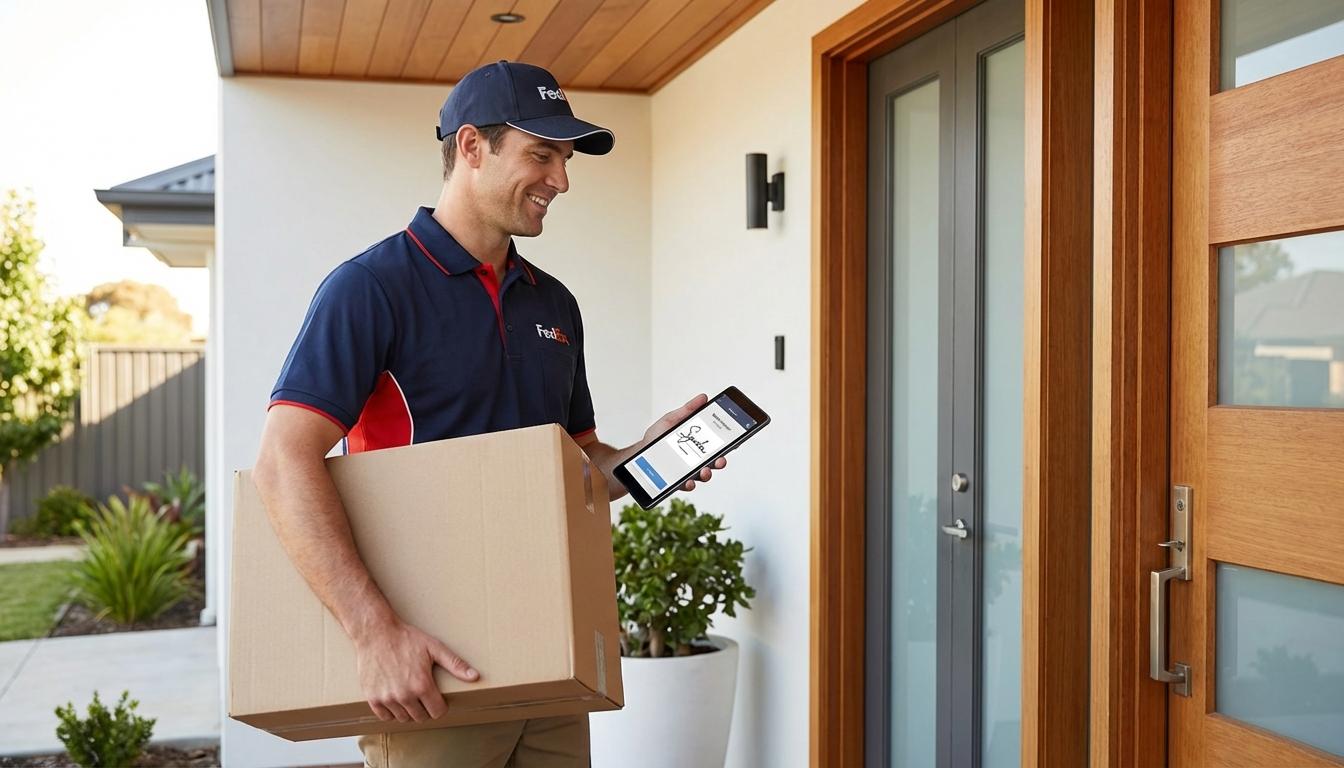
When we talk about confirming a delivery, we are looking for a record that ensures the goods reached the intended recipient. This record serves legal, financial, and operational purposes. It is the final link in the chain of custody. Without it, you are vulnerable to disputes and lost revenue. Here is the thing most people miss: proof of delivery (POD) is fundamentally different from a Bill of Lading (BOL). While the BOL is a contract used before and during transport, the POD is the post-delivery evidence of success.
Let us look at this closely. The traditional approach relied entirely on physical signatures. If a driver lost a clipboard, the record was gone forever. Today, the shift toward digital records has changed the stakes. We now have access to real-time data, GPS coordinates, and visual evidence that were impossible a decade ago. This evolution is not just about technology. It is about speed and reliability. Your best move here is to understand where your specific business sits on this evolutionary curve.
The practical takeaway is that the method you choose determines your level of protection. If you are shipping high-value electronics, a simple door drop is a massive risk. If you are delivering legal documents, a photo might not be legally sufficient. You need to match the method to the cargo and the customer. Ready for the specifics?
Traditional Paper-Based Proof of Delivery
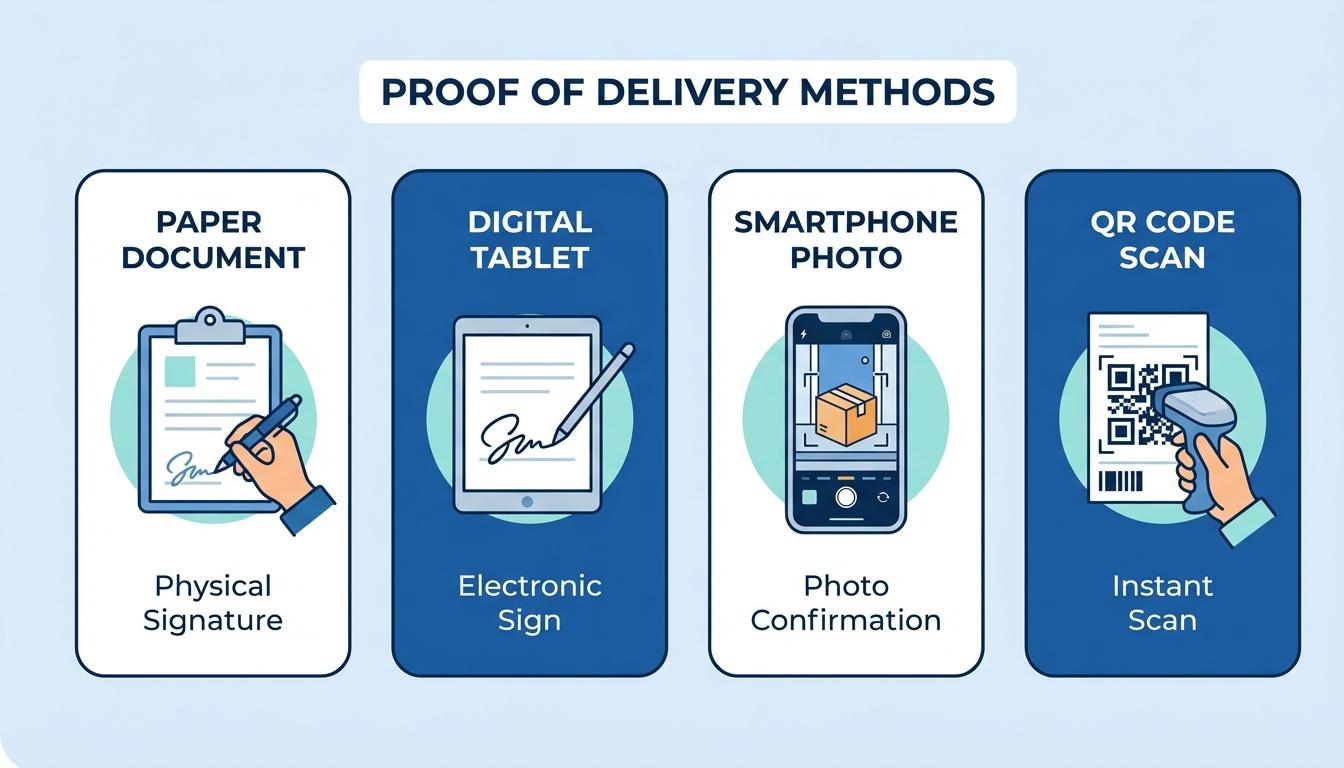
Paper-based systems are the oldest of the proof of delivery methods. This involves a physical document, often called a delivery slip or docket, that the recipient signs by hand. We still see this used in specific sectors, such as legal services or court notices, where a “wet ink” signature is a hard requirement for compliance. According to Pitney Bowes, paper records still provide a sense of security for organizations that require physical archives for legal reasons.
However, paper comes with significant baggage. It is slow. The driver must return the physical slip to the office, and then someone must manually enter that data into a system. This creates a massive window for human error. What happens if the ink smudges? What if the document gets wet or lost in the truck? The security level for paper is generally low to medium because it lacks a digital audit trail. For most modern businesses, relying on paper is an expensive bottleneck. It increases storage costs and makes responding to customer inquiries a slow, manual process.
If you are still using paper, your next step is to evaluate if the legal requirement truly exists for your industry. In most cases, digital signatures have the same legal standing as paper. By digitizing these records, you can integrate them directly with your delivery route optimization software to ensure that every stop is accounted for automatically. The short version is that paper is becoming a niche tool rather than a standard one.
Electronic Proof of Delivery (ePOD)
Electronic Proof of Delivery, or ePOD, is now the industry standard for major carriers like UPS, FedEx, and DHL. This method uses handheld scanners or mobile devices to capture digital signatures. It is fast, eco-friendly, and cost-effective. Here is what that actually looks like in practice: the driver scans a barcode on the package, the recipient signs the screen, and the data is instantly uploaded to a central database. The customer receives an email confirmation seconds after the driver leaves.
So what does this mean for you? The real value of ePOD is real-time visibility. When a customer calls to ask where their package is, your team can see the exact second it was delivered. There is no waiting for the driver to finish their route. Furthermore, ePOD systems often capture more than just a signature. They can log the precise GPS coordinates of the delivery and a timestamp that cannot be easily faked. This level of detail is a game-changer for resolving disputes.
Electronic systems also reduce the administrative burden on your back-office staff. Because the data is digital from the start, it flows directly into your billing and inventory systems. This prevents the manual entry errors that plague paper systems. In practice, this means you can bill your customers faster and maintain more accurate stock levels. If you want to scale your operations, moving to an electronic system is not optional. It is the foundation of a modern logistics strategy.
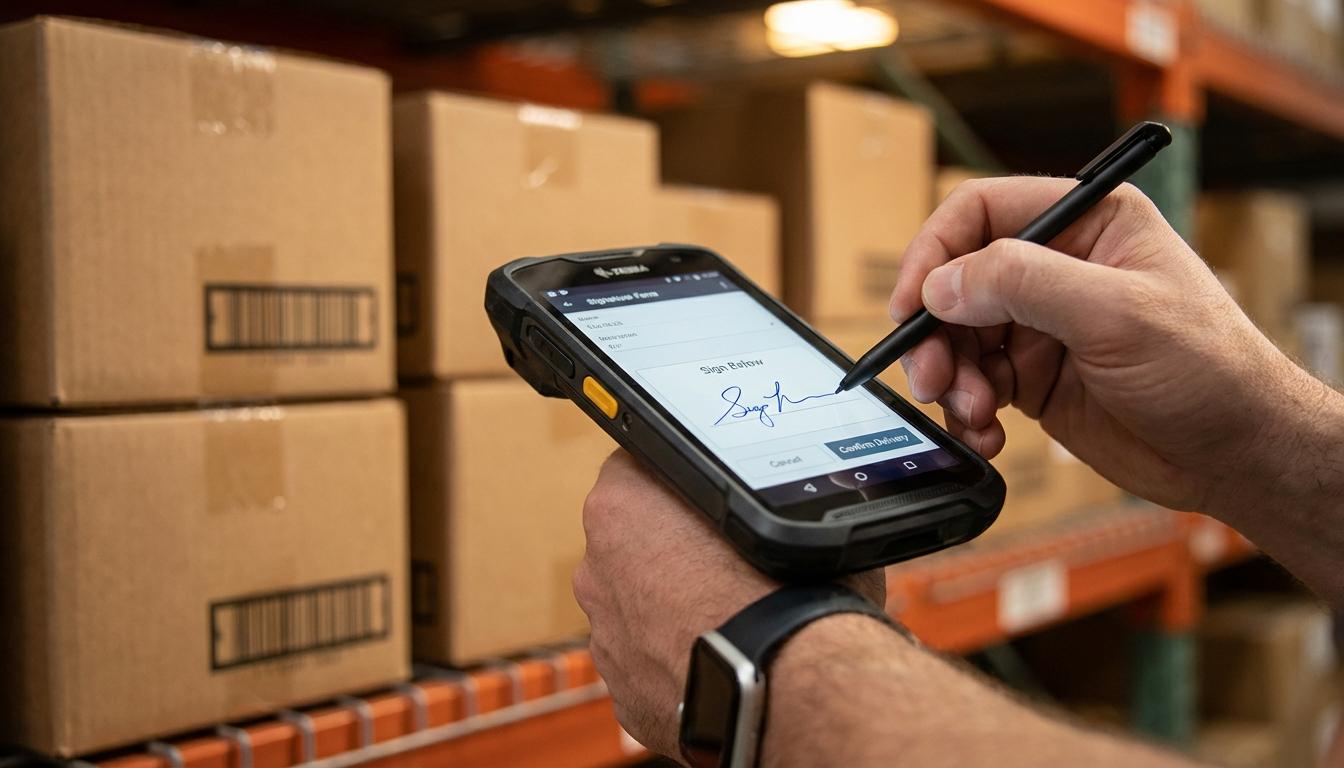
Photo Proof of Delivery: The New Standard for eCommerce
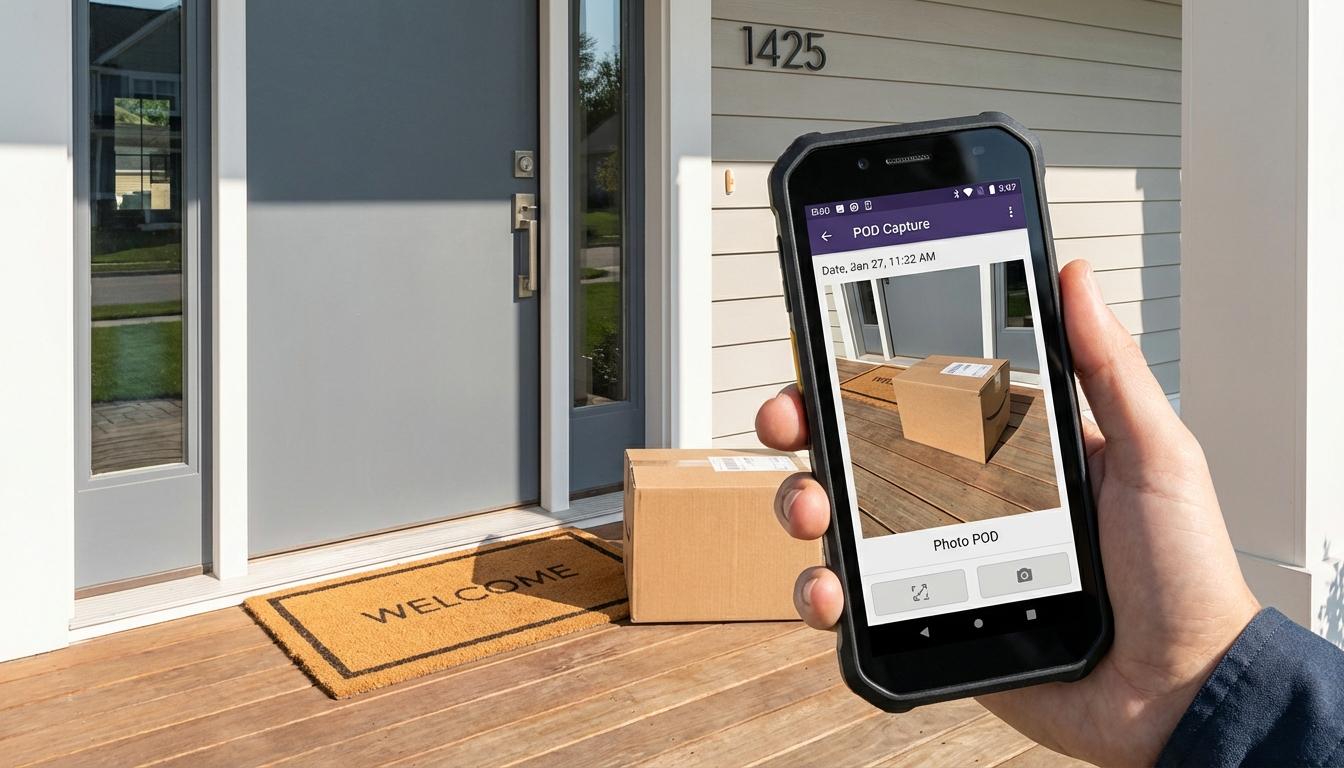
Photo proof of delivery has exploded in popularity, especially with the rise of contactless delivery. This method involves the driver taking a high-resolution photograph of the package in its final resting place, usually a porch or a lobby. This is a specific approach that provides visual evidence of both the delivery and the condition of the package. Research from FedEx shows that offering photo POD helps reduce customer anxiety and provides a clear defense against claims of non-delivery.
This is where it gets practical for eCommerce businesses. Porch piracy is a growing concern, and a signature is not always possible when a customer is not home. A photo proves that the driver did their job correctly. It shows the package was left in a safe location, behind a pillar or inside a gate. When combined with GPS data, a photo creates a nearly airtight record of the event. It is particularly effective for failed delivery reduction because it allows you to identify exactly where a driver might have gone wrong if a customer claims they cannot find their item.
The action item here is simple: if you are doing last-mile delivery directly to consumers, you should be using photo POD. It is often a free or low-cost feature in delivery management software. Most drivers already carry smartphones, so there is no extra hardware to buy. The visual evidence is much harder for a customer to dispute than a scrawled signature that may or may not look like theirs. It builds trust through transparency.
Advanced Verification: QR Codes and PINs
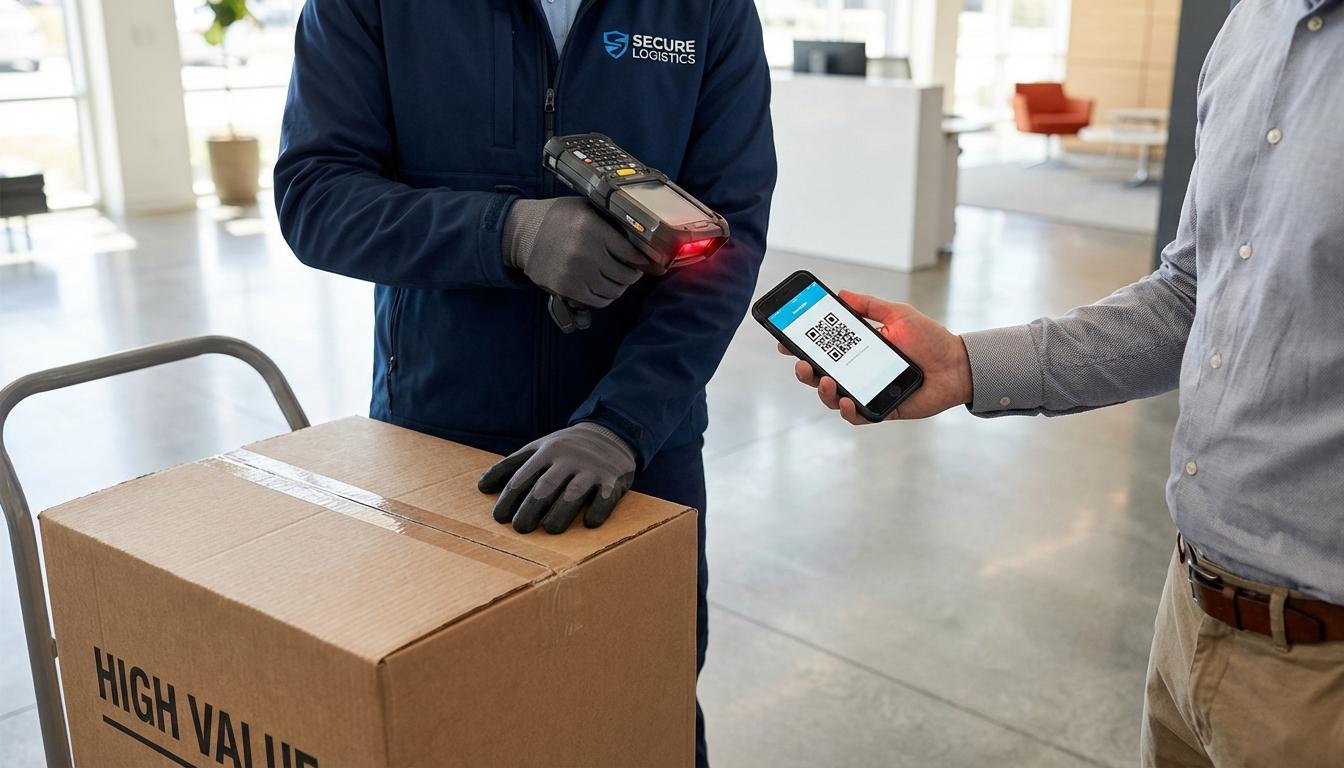
For high-value or age-restricted goods, standard methods might not be secure enough. This is the specific situation where QR codes or PIN verification apply. In this scenario, the recipient is sent a unique code via SMS or email when the package is out for delivery. To receive the package, the recipient must show the QR code for the driver to scan or provide a four-digit PIN. This ensures that the package is handed directly to the correct person.
Let us get into the details of why this matters. A signature can be forged, and a photo of a package on a porch does not prevent someone from stealing it five minutes later. A PIN or QR code requires a physical interaction between the driver and the recipient. This is common for high-end electronics, prescription medications, or alcohol deliveries. It provides a level of security that signatures and photos simply cannot match.
The real question is whether the added friction is worth it for your business. It does take slightly longer for each delivery, which can impact your drivers’ efficiency. However, for items worth thousands of dollars, that extra thirty seconds is a small price to pay to avoid a total loss. This is one of those areas where getting it right makes a real difference in your insurance premiums and customer trust. If you are handling sensitive cargo, this is the gold standard for verification.
Choosing the Right Approach for Your Business
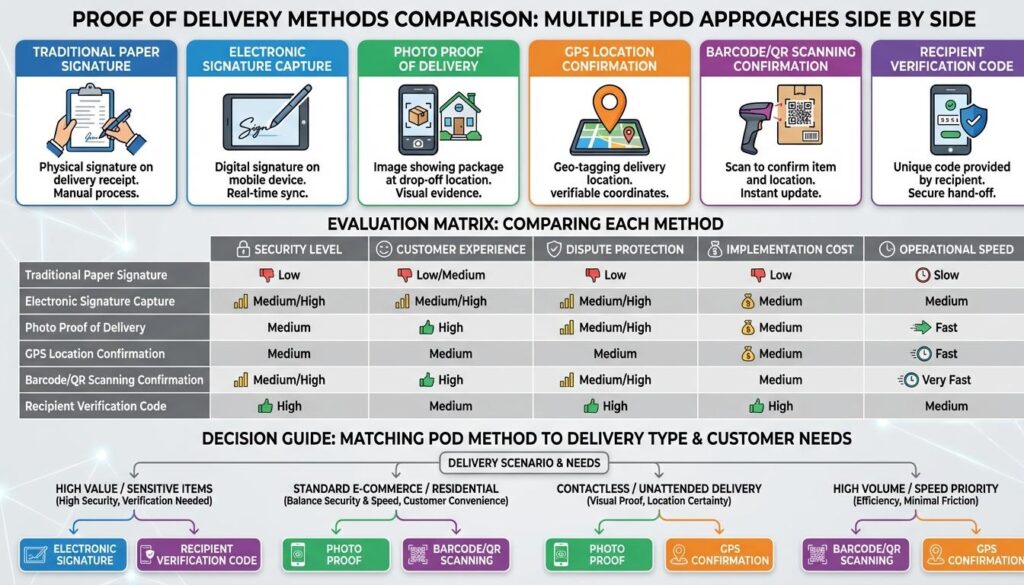
So which approach works best? The direct answer is that it depends on your cargo, your volume, and your customers. We have seen this question come up constantly, so let us settle it. You do not have to choose just one method. Many successful logistics companies use a hybrid approach. They might use photo POD for standard residential deliveries and require a PIN or signature for high-value items or B2B shipments.
When selecting your proof of delivery methods, consider these factors:
- The value of the goods: Higher value requires higher security (PIN or Signature).
- The delivery environment: Residential areas benefit from photo POD, while office buildings often require signatures.
- Your technology stack: Ensure your POD method integrates with your existing warehouse and transport management systems.
- Customer expectations: Modern customers want instant digital notifications and visual proof.
Your next step is to audit your current delivery failures. Are customers claiming they never received packages that your drivers say they delivered? If so, photo POD is your best move. Are you spending too much time on manual data entry? Then it is time to move from paper to ePOD. The goal is to create a frictionless experience for the customer while protecting your business from liability. Getting the verification right is the detail that changes everything for your operational efficiency.
Quick Reference: Proof of Delivery Methods at a Glance
- Paper-Based POD: Best for legal compliance and “wet ink” requirements. High risk of loss and slow processing.
- Electronic POD (ePOD): The standard for speed and real-time data. Captures digital signatures and timestamps instantly.
- Photo Proof: Essential for eCommerce and contactless delivery. Provides visual evidence of location and package condition.
- QR Code/PIN: Highest security for high-value or age-restricted items. Requires direct recipient interaction.
- GPS Tagging: Often combined with other methods to provide the exact latitude and longitude of the drop-off.
- Signature Confirmation: Traditional but still effective for B2B and high-security legal documents.
Common Questions About Proof of Delivery Methods
What is the difference between paper POD and ePOD?
The answer is speed and reliability. Paper POD requires physical signatures on paper slips that must be manually filed, while ePOD uses digital devices to capture signatures and upload data in real-time. ePOD reduces human error and storage costs significantly.
Is photo proof of delivery legally binding?
Yes, in most commercial contexts. A photo of a package at the correct GPS location serves as strong evidence of delivery in disputes. However, for certain legal or government documents, a physical or digital signature may still be required by law.
Which carriers use electronic proof of delivery?
Most major global carriers, including UPS, FedEx, and DHL, use ePOD. They often provide this data to customers through tracking links, allowing them to download digital signatures or view delivery photos immediately after the package arrives.
Can I combine different delivery verification methods?
Absolutely, and this is often the best strategy. Many companies use GPS tracking for every delivery, photos for residential drops, and signatures for high-value items. This multi-layered approach provides the best protection against various types of delivery issues.
Providing the right confirmation at the end of the delivery journey is about more than just checking a box. It is about closing the loop on a promise you made to your customer. By choosing the right method, you reduce friction, lower your costs, and build a reputation for reliability. Whether you rely on photos, signatures, or digital codes, the key is consistency. Make sure your drivers are trained on the specific requirements for each type of delivery so that your data is always accurate and your business is always protected. For those looking to dive deeper into the logistical hurdles that occur before the delivery happens, understanding last mile delivery challenges and solutions can provide the broader context you need to optimize your entire operation.