Reducing Failed Deliveries: Strategies That Work
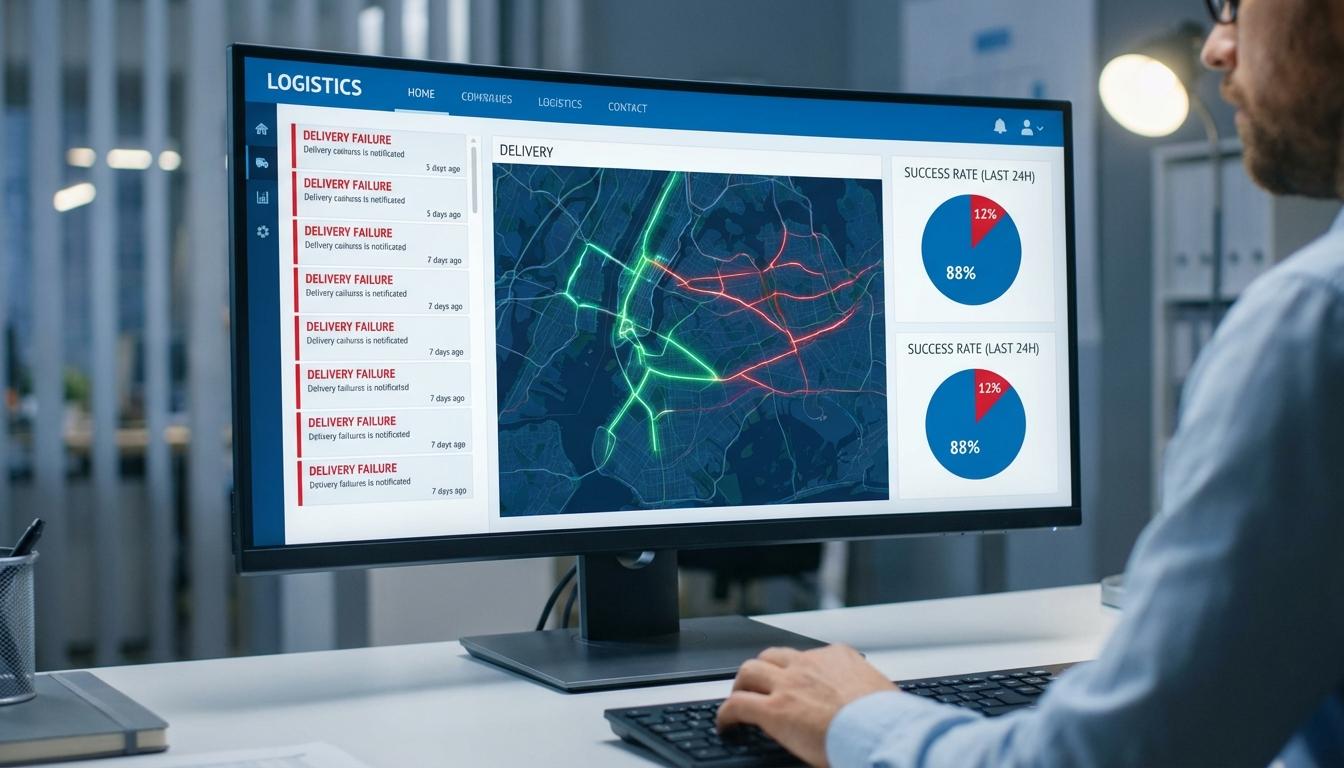
Are you seeing too many “delivery failed” notifications in your dashboard? Achieving a high failed delivery reduction is not just about saving fuel, it is about keeping your customers from jumping ship to a competitor. We know how frustrating it is to see a perfectly good order bounce back to the warehouse because of a simple misunderstanding or a closed gate. If you are ready for a detailed breakdown of how to fix these leaks in your logistics chain, you have come to the right place. While we often discuss the broader scope of last mile delivery challenges and solutions, this discussion is focused purely on the mechanics of making sure every package finds its home on the first try.
You likely already know that a failed delivery costs significantly more than a successful one. It involves double the fuel, double the driver time, and a massive hit to your customer service team’s bandwidth. We are going to get straight into what works, what does not, and exactly what you should do to improve your numbers. Let us get specific about the details that actually move the needle for your delivery success rate.
Identifying the Primary Delivery Failure Causes
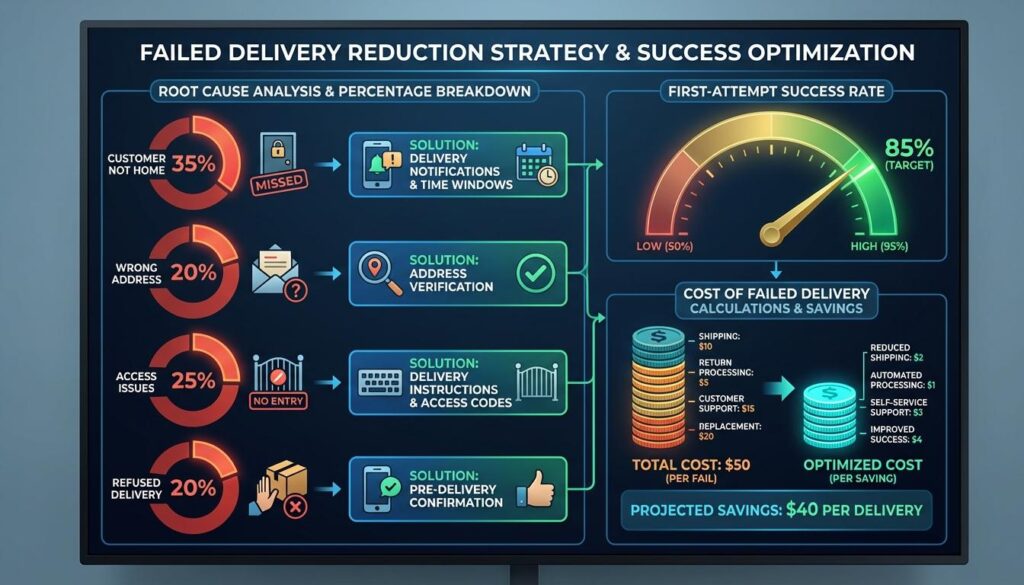
To fix the problem, we have to be honest about why it is happening. Most failures fall into three buckets: bad data, bad timing, or bad luck. Bad luck, like a sudden road closure, is hard to manage. But the other two are entirely within your control.
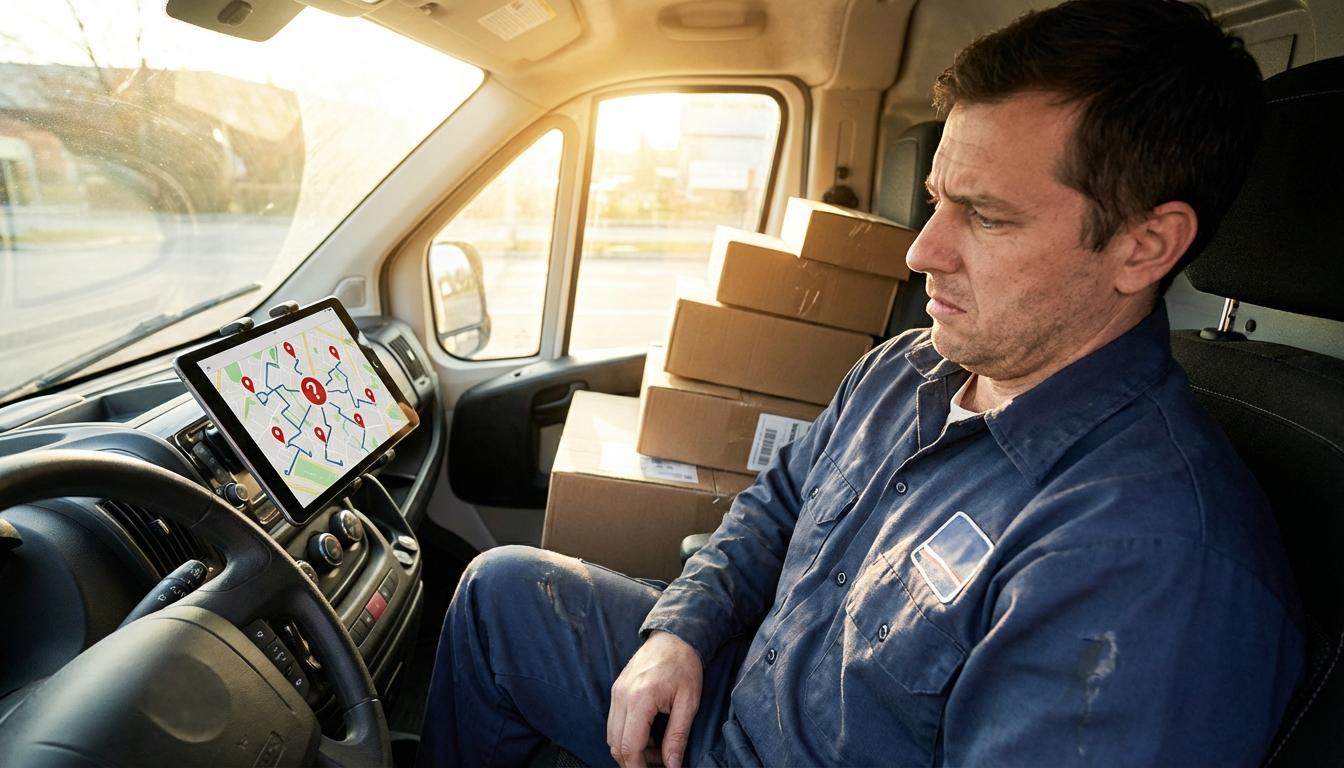
Incorrect or incomplete addresses are a massive hurdle. In fact, research from Locus shows that incorrect addresses cause about 5% of all returns. This is especially true in rapidly developing areas or regions where landmarks are used instead of traditional street numbers. When a driver cannot find the door, the delivery fails before it even begins. This is the first area where we see companies lose money.
The second major cause is customer unavailability. Life happens. People go to the grocery store, they take the dog for a walk, or they simply do not hear the doorbell. If your delivery window is “sometime between 8 AM and 6 PM,” you are setting your driver up for a missed delivery. Here is the thing most people miss. It is not just about the customer being home. It is about the customer knowing exactly when to be home. Ready for the specifics on how to solve this?
Proactive Missed Delivery Prevention Through Data
The most effective way to stop a failure is to prevent it before the van even leaves the warehouse. This starts at the checkout screen. If you wait until the package is out for delivery to worry about the address, you are already too late. We recommend implementing real-time address validation tools that nudge the customer if they forget an apartment number or mistype a zip code.
Data analysis is another heavy hitter here. By looking at historical delivery patterns, we can identify specific zones or time slots that consistently result in failures. For instance, delivering to business districts after 5 PM is a recipe for a delivery success rate disaster. Some logistics operations have managed to reduce failed deliveries by 30% simply by adjusting their scheduling based on these data insights. When it comes to failed delivery reduction, the numbers do not lie. You should be looking at your failure rates by zip code, by driver, and by time of day every single week.
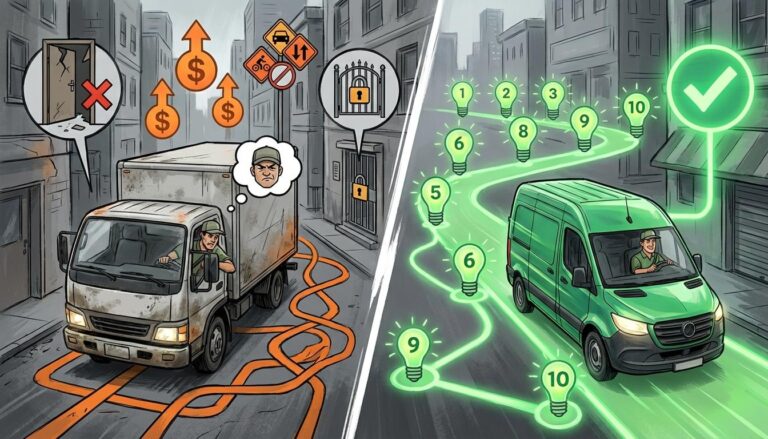
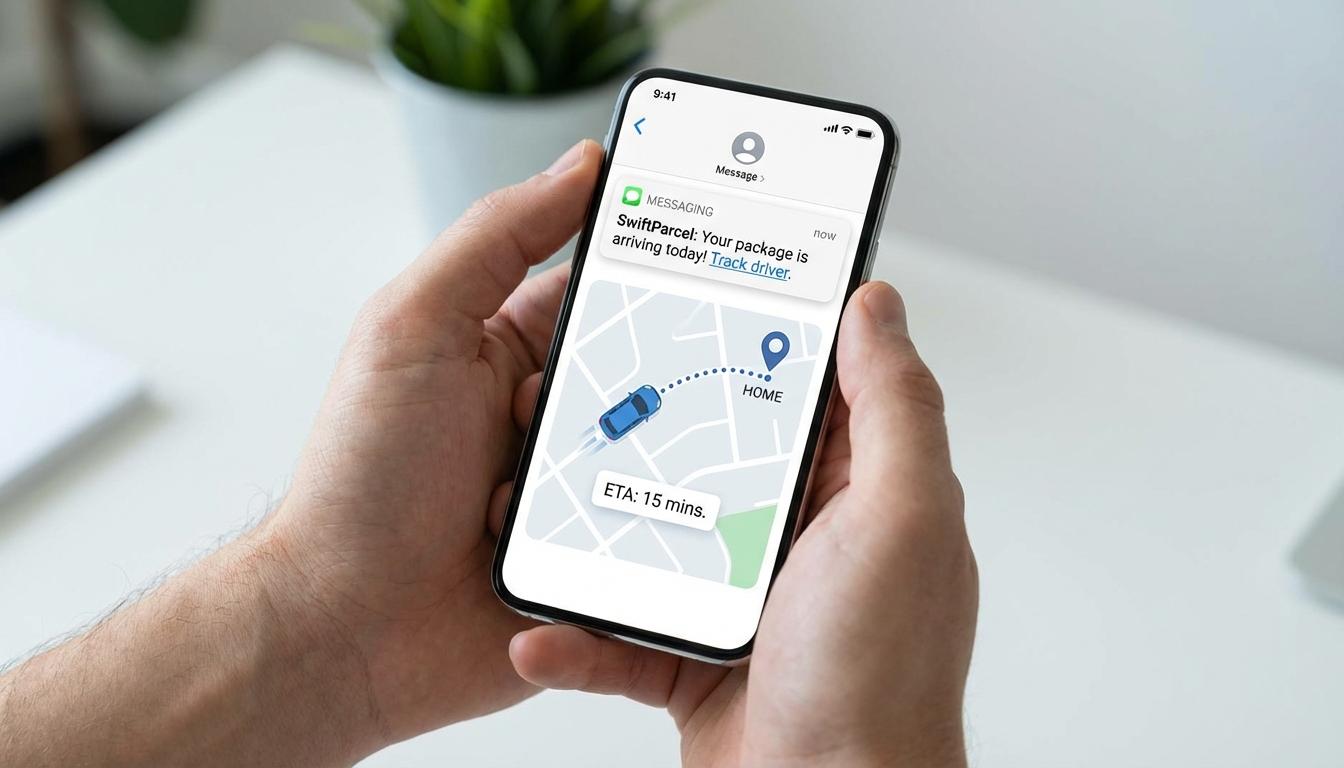
Another practical takeaway is the use of automated communication. We should be sending out-for-delivery notices via SMS rather than just email. Emails get buried. A text message with a live tracking link gets noticed. This gives the customer a chance to reach out and say, “I am not home, please leave it with the neighbor,” before the driver even pulls into the driveway. Using advanced delivery route optimization tools can ensure these windows are accurate so the customer is not waiting all day for a package that arrives four hours late.
Boosting First Attempt Delivery with Real-Time Tech
Let us look at this closely. The first attempt delivery rate is the gold standard of logistics efficiency. Every time a driver has to circle back, your profit margin on that order evaporates. Real-time visibility is the key difference between a successful drop-off and a “we missed you” sticky note. When the driver has a precise GPS location and the customer has a real-time ETA, the success rate naturally climbs.
Accuracy matters more than speed here. It is better to tell a customer the package will arrive at 2:15 PM and be right, than to promise it “before noon” and show up at 12:30 PM. According to FarEye, providing accurate ETAs manages customer expectations and prevents the surprises that lead to missed deliveries. This level of transparency builds trust. It also reduces the number of “where is my order” calls your support team has to handle.
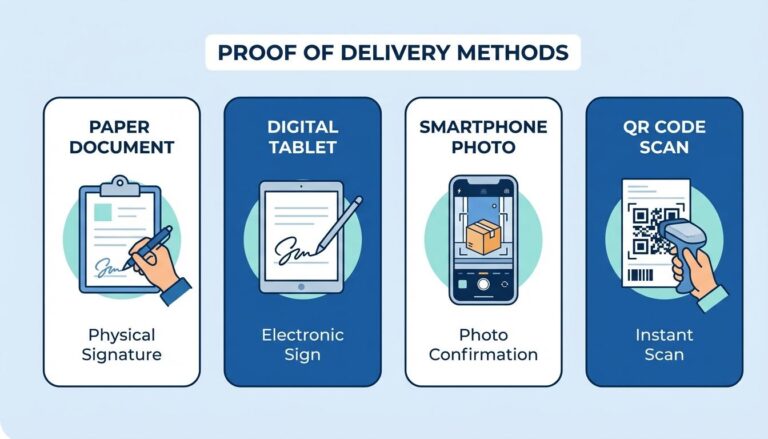
What should you do right now? Start by equipping your drivers with mobile apps that allow for instant communication. If a driver is stuck at a gate, they should be able to tap a button to call or text the customer directly without exposing their personal phone number. This simple bridge of communication can turn a certain failure into a successful delivery completion rate stat in under sixty seconds. We also suggest implementing various proof of delivery methods to ensure that once a delivery is made, there is no ambiguity about where and when it happened.
Diversifying Delivery Options to Reduce Pressure
Sometimes the best way to ensure a delivery succeeds is to not deliver it to a home at all. If you are struggling with a high redelivery reduction cost, you should look at diversifying where packages go. Not every customer wants or needs a front-door delivery, especially if they live in an area prone to package theft or have restricted access buildings.
Click-and-collect and curbside pickup options are excellent for missed delivery prevention. By allowing customers to pick up their items at a local locker or a partner retail location, you eliminate the “not at home” problem entirely. This is a win-win situation. The customer gets their package on their own schedule, and your driver makes one stop for twenty packages instead of twenty stops for twenty packages. This distribution of load is one of the most effective strategies for scaling your operations without blowing your budget on fuel.
We also recommend offering scheduled delivery slots at checkout. While this adds a layer of complexity to your routing, it significantly boosts the delivery success rate. When a customer pays for or selects a specific two-hour window, they are much more likely to be there to receive it. The practical takeaway is simple. Give the customer more control, and they will help you do your job more efficiently. The more options you provide, the less likely you are to face a “delivery failed” scenario.
Handling Post-Attempt Management and Escalations
What happens when the first attempt fails despite your best efforts? This is where your post-attempt strategy kicks in. Most companies just throw the package back on the truck for the next day, but that is often a mistake. If they were not home at 2 PM on Tuesday, there is a good chance they will not be home at 2 PM on Wednesday either.
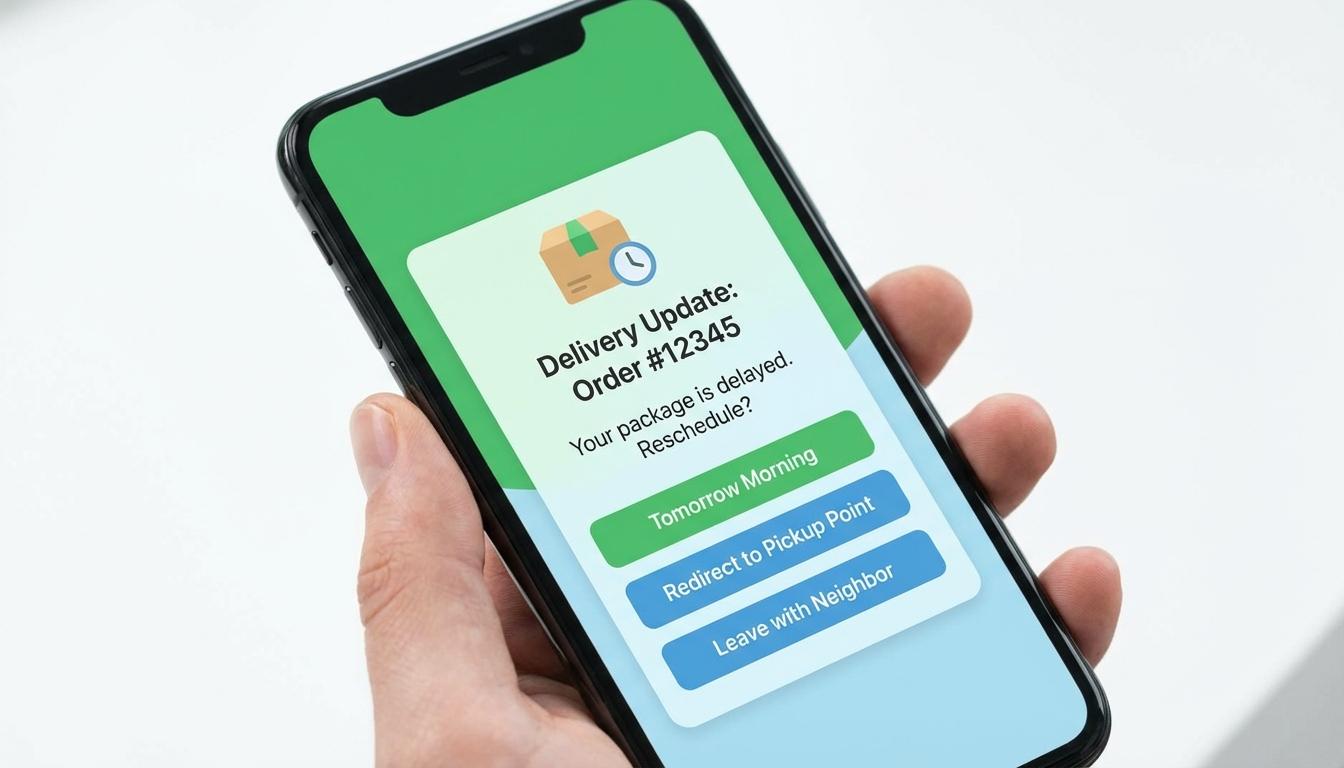
Here is the step-by-step breakdown of how to handle a failure. First, the driver should immediately trigger an automated notification. This alert should not just say “we missed you.” It should provide immediate options: “Would you like to reschedule for tomorrow morning? Would you like to redirect this to a pickup point? Or should we leave it with a specific neighbor?” Giving the customer the power to redirect the package while it is still on the truck can save a second failed attempt.
We suggest a “two strikes” rule. After the first failure, offer a redirection. After the second failure, the package should automatically be sent to a nearby collection point rather than attempting a third home delivery. According to ParcelLab, providing clear instructions for pickup, including maps and operating hours, helps maintain customer satisfaction even when the initial delivery fails. For your specific case, you might even consider “VIP rescheduling” for high-value items, where a customer service agent reaches out personally to ensure the second attempt is a success.
Quick Reference: Failed Delivery Reduction at a Glance
- Validate addresses at the point of purchase to eliminate data errors.
- Use SMS alerts instead of emails for “out for delivery” notifications.
- Implement real-time tracking so customers can see the driver’s progress.
- Offer flexible delivery options like lockers or local pickup points.
- Analyze failure data weekly to identify patterns in timing or location.
- Set a clear escalation path after the first failed attempt.
- Equip drivers with tools to contact customers directly at the door.
- Use route optimization to ensure ETAs are accurate and reliable.
Common Questions About Failed Delivery Reduction
What is a good first attempt delivery rate?
The answer is that while it varies by industry, most high-performing logistics operations aim for a 95% or higher FADR. If you are falling below 90%, you are likely losing a significant portion of your margin to redelivery costs and should look at your routing and communication tools immediately.
How much does a failed delivery actually cost a business?
It is more than just the extra fuel. The real story is that each failure costs roughly 1.5 times the original delivery cost when you factor in administrative time, driver labor, fuel, and potential customer churn. For some e-commerce brands, this can mean the difference between profit and loss on an entire order.
Can route optimization software really reduce failures?
Yes, and here is why. Route optimization does not just find the shortest path; it balances the workload and provides realistic arrival windows. When drivers are not rushed and ETAs are accurate, the chance of the customer being ready and available increases dramatically.
What is the most common reason for a delivery to fail?
The short version is customer unavailability, followed closely by incorrect address information. Most people are not trying to miss their packages, but if they do not know exactly when you are coming, they cannot plan their day around your arrival.
Reducing failed deliveries is a game of inches. It requires a combination of better data at the start, better communication during the journey, and better options at the finish line. We have seen that companies focusing on these specific details see a direct improvement in their bottom line and customer loyalty. Your best move here is to start with the low-hanging fruit: address validation and SMS notifications. Once those are in place, you can move into the more complex areas of route optimization and diversified pickup points. Focus on the first attempt delivery as your primary metric, and the rest of your logistics efficiency will naturally follow. When you stop chasing missed deliveries, you finally have the time and resources to focus on growing your business.